Negative impactCompany
Negative Breakout: These 6 stocks cross below their 200 DMAs
Economic Times 4 hrs ago·27 Jul 2026, 1:59 am
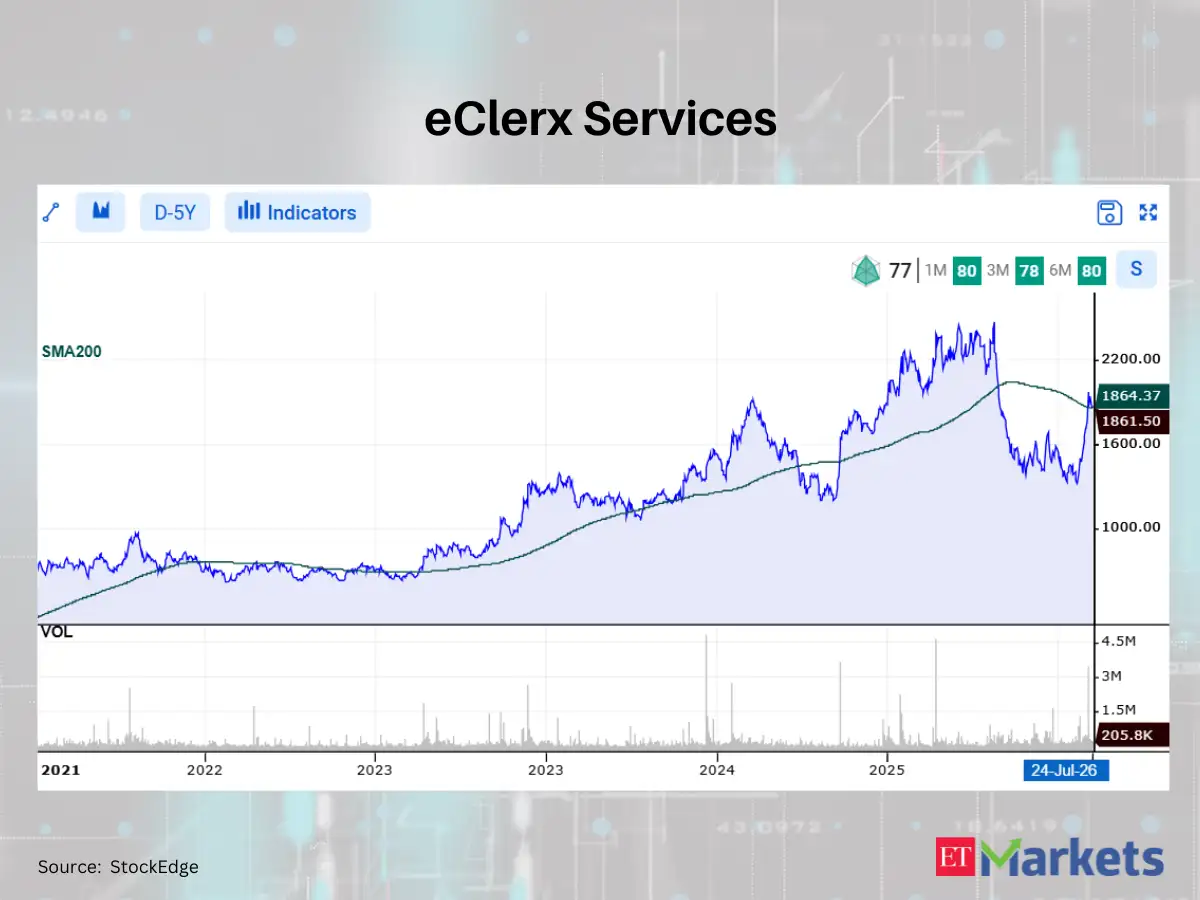
A stock crossing below its 200-day moving average (DMA) is often seen as a major bearish signal. This technical threshold is widely followed by traders to identify the long-term trend. When a stock breaks this support level, it suggests that the prevailing uptrend has reversed, potentially opening the door for further downside.
For investors, this development is significant as it highlights a shift in market sentiment. It implies that the stock is now trading below its average price over the last 200 trading days, which can indicate weakening momentum. While technical breaks can sometimes be temporary, they serve as an important warning sign for those holding positions in the affected names.
Moving forward, market participants will closely watch the stock's ability to reclaim this key level. If the price remains below the 200 DMA, it could continue to face selling pressure. Conversely, a strong recovery above this line might signal a potential reversal, though investors should exercise caution and assess other market factors before making any decisions.
Excerpt from Economic Times
In the NSE list of stocks with a market cap over Rs 10,000 crore, the closing prices of six stocks crossed below their 200 DMA (Daily Moving Averages) on July 24, according to stockedge.com 's technical scan data. Trading below the 200 DMA is considered a negative signal because it indicates that the stock's price is…Read the original at Economic Times
Key takeaways
- Category: Company.
- AI reads the tone as negative (potentially bearish) for the stock.
Why it matters
A routine update. The tone is negative — watch for downside reaction. Use the price and stock snapshot to gauge how the market is responding.