Amazon burns cash, Intel flags weak PC demand as AI boom's costs ripple across markets
Economic Times 1 hr ago·30 Oct 2026, 1:56 am
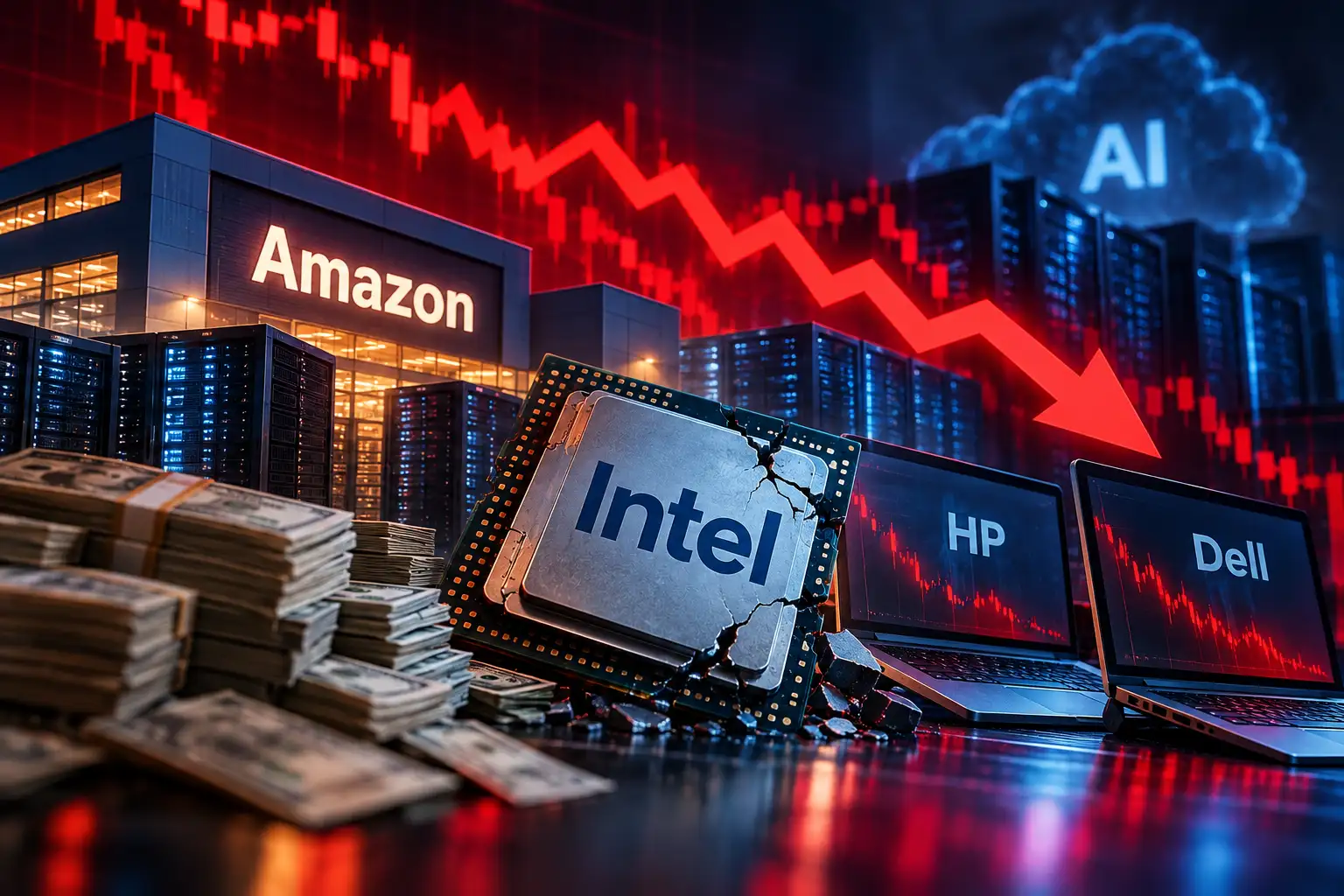
Major technology companies are facing headwinds as the high costs associated with artificial intelligence investments begin to weigh on their financial performance. Amazon and Intel have reported weaker-than-expected results, citing rising operational expenses and a slowdown in consumer demand for personal computers. These challenges have forced both firms to borrow more capital to cover their daily expenses, highlighting a growing disconnect between heavy spending on new technologies and immediate revenue generation.
For investors, this development signals a shift in the tech sector's growth narrative. The rapid expansion of AI infrastructure is no longer viewed solely as a driver of future profits, but as a current burden on balance sheets. This has led to a pullback in shares of semiconductor and cloud computing companies as the market reassesses the sustainability of current spending levels and the timeline for profitability.
Moving forward, the focus will be on how these companies manage their cash flows and whether they can demonstrate a clear path to efficiency. Investors should watch for upcoming earnings reports to see if spending cuts are implemented or if the trend of increased borrowing continues. This will be crucial in determining if the tech sector can maintain its momentum despite the current headwinds.
Excerpt from Economic Times
As Wall Street grows increasingly anxious about AI-related expenditures, major tech giants like Amazon and Intel display alarming financial outcomes. With soaring operational costs and waning consumer interest, both companies face challenging cash flow situations, resulting in borrowing to cover rising expenses. This…Read the original at Economic Times
Key takeaways
- Category: Economy.
- AI reads the tone as negative (potentially bearish) for the stock.
- Flagged as a high-impact, market-moving story.
Why it matters
This is a high-impact development and could move the stock. The tone is negative — watch for downside reaction. Use the price and stock snapshot to gauge how the market is responding.