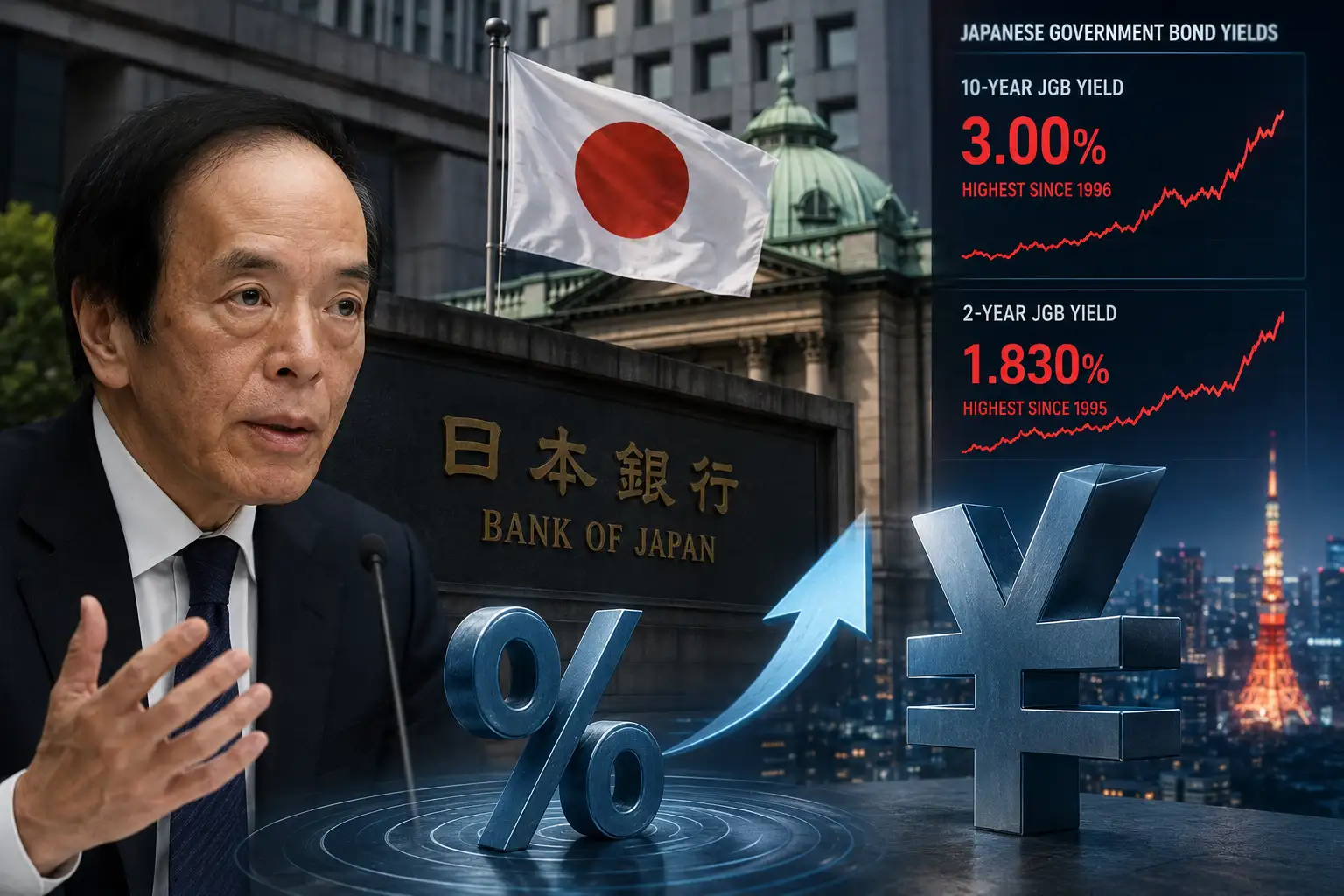
Bond selloff deepens as inflation, oil prices jolt markets
Economic Times 1 hr ago·2 Sept 2026, 3:42 am

Global bond markets are facing a sharp downturn as investors react to persistent inflation and rising oil prices. This has led to a significant increase in bond yields, meaning the cost for governments and companies to borrow money has gone up. The surge in energy costs is a major driver, adding pressure on government finances and prompting investors to demand higher returns to hold these assets.
For retail investors, this development matters because higher borrowing costs often filter through to the wider economy. It can lead to increased expenses for businesses and potentially higher interest rates for consumers, including those looking to take out mortgages. The situation highlights a challenging environment where the search for safety is pushing investors toward riskier assets, creating volatility across the broader market.
Investors should keep a close watch on upcoming inflation data and central bank policy decisions. Any signs of a slowdown in inflation or a shift in monetary policy could stabilize bond prices. Additionally, monitoring the impact of rising borrowing costs on corporate earnings and consumer spending will be crucial for gauging the market's next move.
Excerpt from Economic Times
The bond market is undergoing a tumultuous selloff, resulting in elevated borrowing costs for potential borrowers. Concerns surrounding inflation and rising government debt are amplified by increasing energy prices. As yield rates climb, homeowners should brace for higher mortgage costs, adding fiscal strain for many.…Read the original at Economic Times
Key takeaways
- Category: Economy.
- AI reads the tone as negative (potentially bearish) for the stock.
- Flagged as a high-impact, market-moving story.
Why it matters
This is a high-impact development and could move the stock. The tone is negative — watch for downside reaction. Use the price and stock snapshot to gauge how the market is responding.