Negative impactResults
D-Street’s stellar rally faces valuation test as bond allure grows
Economic Times 2 hrs ago·20 Nov 2026, 2:47 am
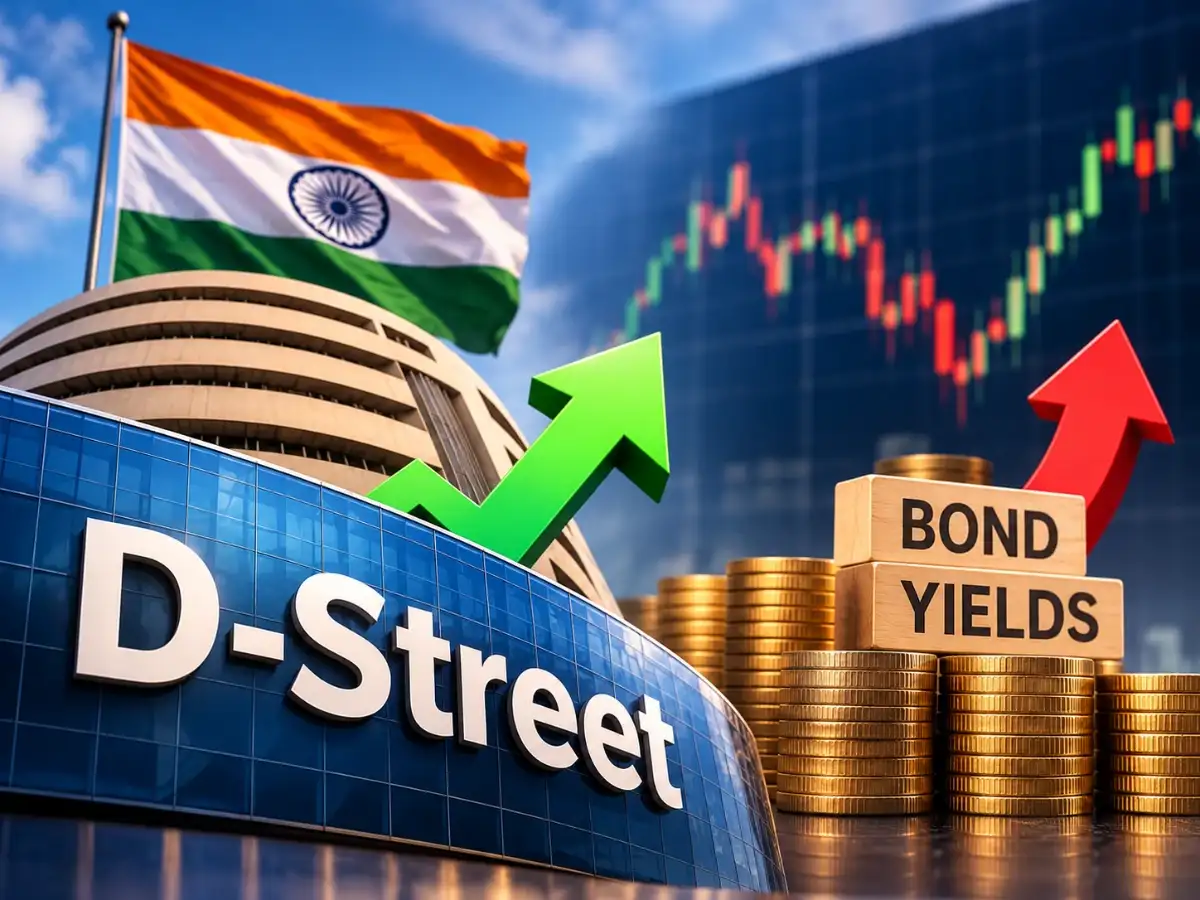
India's benchmark stock indices have recently hit record highs, but a strong rally often invites caution. The primary reason is a shift in investor focus toward fixed-income assets. As government bond yields climb, the returns on safer options like bonds become more attractive compared to the riskier equity market. This dynamic creates a valuation challenge where the cost of borrowing rises, potentially dampening the growth prospects for companies.
For investors, this means the premium they once demanded for holding stocks is shrinking. When bond yields are high, stock valuations often face pressure because investors can earn a risk-free return elsewhere. While global firms remain bullish on India's long-term economic story, this specific phase highlights a trade-off between safety and growth. The market is currently testing whether current stock prices can justify the risk in a high-interest-rate environment.
Moving forward, the key metric to watch will be the spread between bond yields and corporate earnings. If bond yields continue to rise faster than company profits, valuations may need to adjust downward. Investors should monitor upcoming corporate earnings reports to see if businesses can sustain growth despite the higher cost of capital. The market's reaction to these earnings will determine if the rally can continue or if a correction is on the horizon.
Excerpt from Economic Times
India's stock market is experiencing valuation challenges due to increasing bond yields that diminish equity attractiveness. The gap between government bond yields and stock earnings yield has widened significantly recently. Analysts suggest that high bond yields could hamper valuations as earnings struggle to catch…Read the original at Economic Times
Key takeaways
- Category: Results.
- AI reads the tone as negative (potentially bearish) for the stock.
- Assessed as a significant, market-relevant update.
Why it matters
A meaningful update worth tracking. The tone is negative — watch for downside reaction. Use the price and stock snapshot to gauge how the market is responding.