Neutral impactEconomy
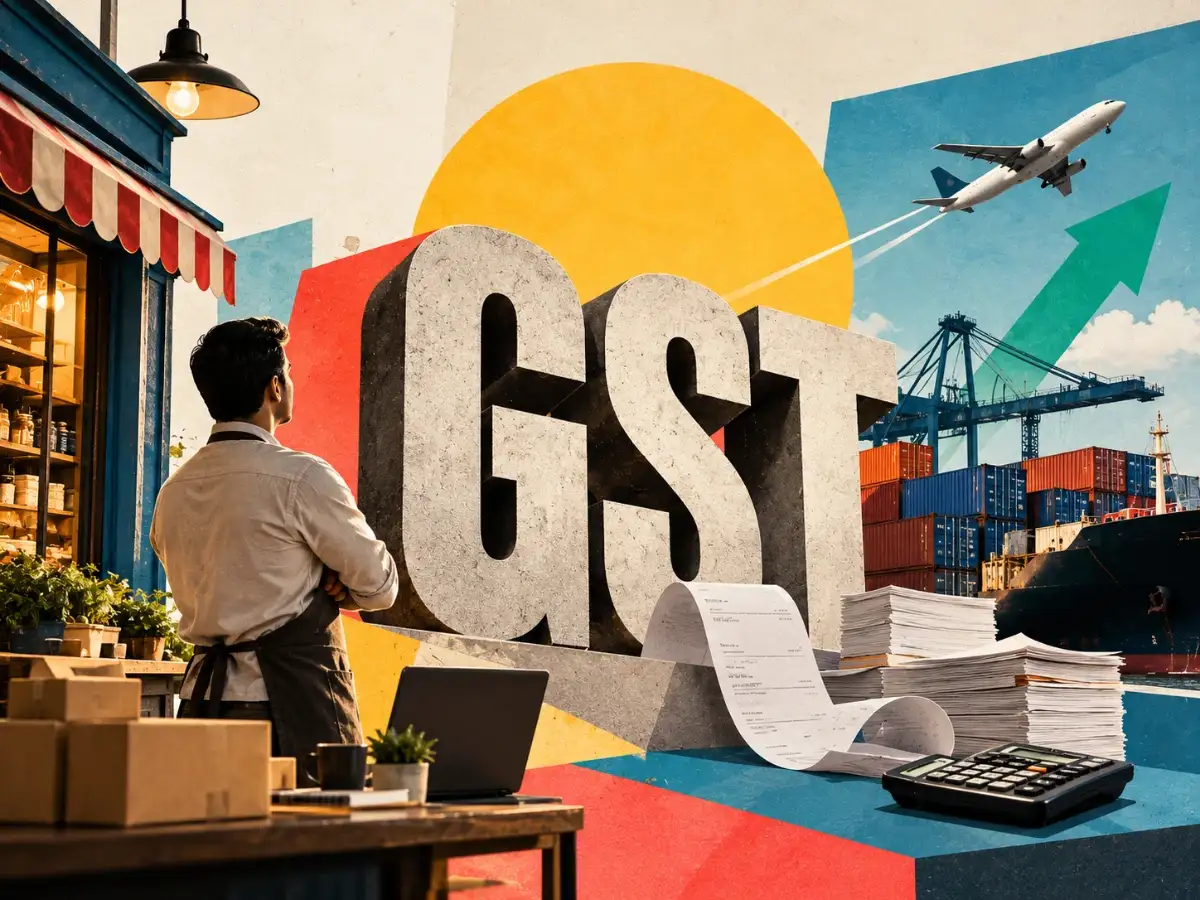
ET Graphics: The GST playbook — milestones over 9 years
Economic Times 1 hr ago·8 Oct 2026, 7:28 pm
The Goods and Services Tax (GST) was introduced in 2017 to replace a complex web of indirect taxes and simplify India's business landscape. Over the last nine years, the system has evolved significantly, moving from a basic rollout to a more digitised and predictable regime. This journey has involved changes in tax rates, slabs, and compliance procedures, which have reshaped how businesses manage their indirect tax liabilities and interact with tax authorities.
For investors, the maturation of the GST regime is a positive development. A more efficient and transparent tax structure improves the ease of doing business, which can lead to better corporate governance and more accurate financial reporting. This stability makes it easier for investors to assess the true profitability of companies operating in India, reducing the uncertainty often associated with complex tax environments.
Moving forward, the focus will likely be on further streamlining compliance and refining tax slabs. Investors should monitor any policy announcements regarding GST rate rationalisation or technological upgrades to the tax administration system, as these changes can impact the operating costs and margins of various sectors.
Key takeaways
- Category: Economy.
Why it matters
A routine update. Use the price and stock snapshot to gauge how the market is responding.