India-New Zealand Free Trade Agreement Comes into Force, Granting Indian Goods 100% Duty-Free Access
Hindusthan Samachar English 14 hrs ago·19 Oct 2026, 8:30 pm
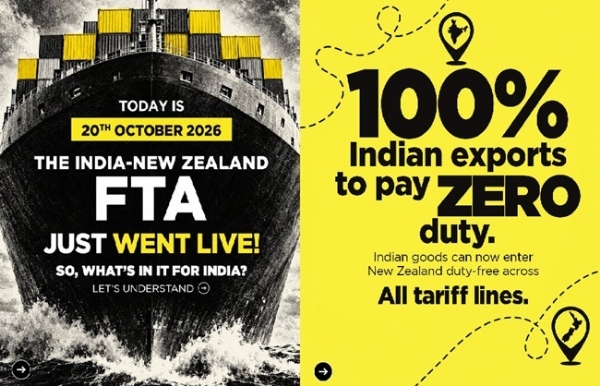
India and New Zealand have officially implemented their Free Trade Agreement (FTA), a significant step in strengthening economic ties between the two nations. The deal removes all customs duties on a wide range of Indian exports to New Zealand, allowing Indian businesses to compete more effectively in the New Zealand market. This move is expected to boost trade volumes and provide Indian manufacturers with better market access in a key South Asian country.
For investors, this development signals a positive shift in India’s trade relations and could enhance the country's export potential. While the immediate impact on the broader market may be moderate, the long-term benefits include diversified trade opportunities and potential growth in export-oriented sectors. It also reflects India's broader strategy to deepen international economic partnerships.
Investors should monitor the performance of export-driven companies and sectors that stand to gain from this agreement. Keeping an eye on trade data and policy implementation will be crucial to understanding the full extent of the opportunity. This move reinforces India’s commitment to global trade and could pave the way for similar agreements in the future.
Excerpt from Hindusthan Samachar English
New Delhi, 20 October (H.S.): The Free Trade Agreement (FTA) between India and New Zealand came into force on Tuesday, granting Indian products 100 per cent duty-free access to the New Zealand market. Under the agreement, import duties on a range of New Zealand goods entering the Indian market have also been reduced…Read the original at Hindusthan Samachar English
Key takeaways
- Category: Economy.
- AI reads the tone as positive (potentially bullish) for the stock.
- Flagged as a high-impact, market-moving story.
Why it matters
This is a high-impact development and could move the stock. The tone is positive — historically associated with upward pressure, though not predictive. Use the price and stock snapshot to gauge how the market is responding.