Neutral impactCorporate Action
Is a graded capital gains tax regime better than taxing dollar gains?
CNBC-TV18 1 hr ago·26 Nov 2026, 2:37 pm
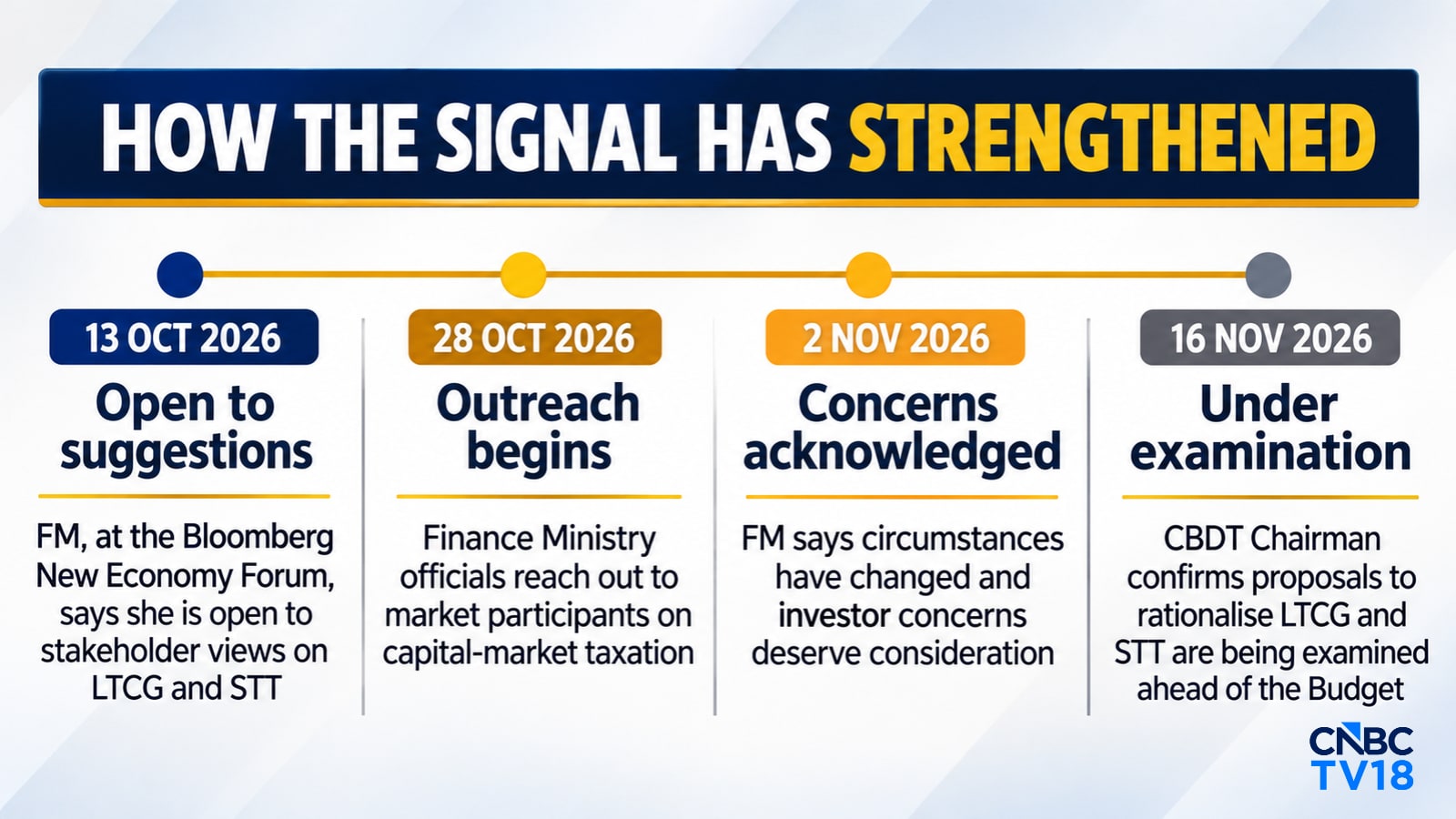
The Indian government is considering a graded capital gains tax regime for foreign portfolio investors (FPIs), which would tax profits based on how long they hold the asset. This approach aims to solve the current issue where short-term gains are taxed at the same rate as long-term gains, creating a disincentive for long-term investment. By differentiating the tax rates, the government hopes to encourage a more stable flow of foreign capital into the Indian market.
For investors, this change could lead to more predictable returns for foreign investors, potentially making India a more attractive destination for long-term funds. However, a graded tax system introduces complexity and could reduce the liquidity of the market if foreign investors move to jurisdictions with simpler tax structures. It is a trade-off between encouraging stability and maintaining market fluidity.
Investors should watch for the government's final policy announcement to understand the specific tax brackets. The broader market will likely react to the sentiment surrounding foreign investment flows, so keeping an eye on foreign institutional investor (FII) trends will be crucial in the coming weeks.
Key takeaways
- Category: Corporate Action.
Why it matters
A routine update. Use the price and stock snapshot to gauge how the market is responding.