Negative impactStocks
Negative Breakout: These 8 stocks cross below their 200 DMAs
Economic Times 2 hrs ago·9 Oct 2026, 1:55 am
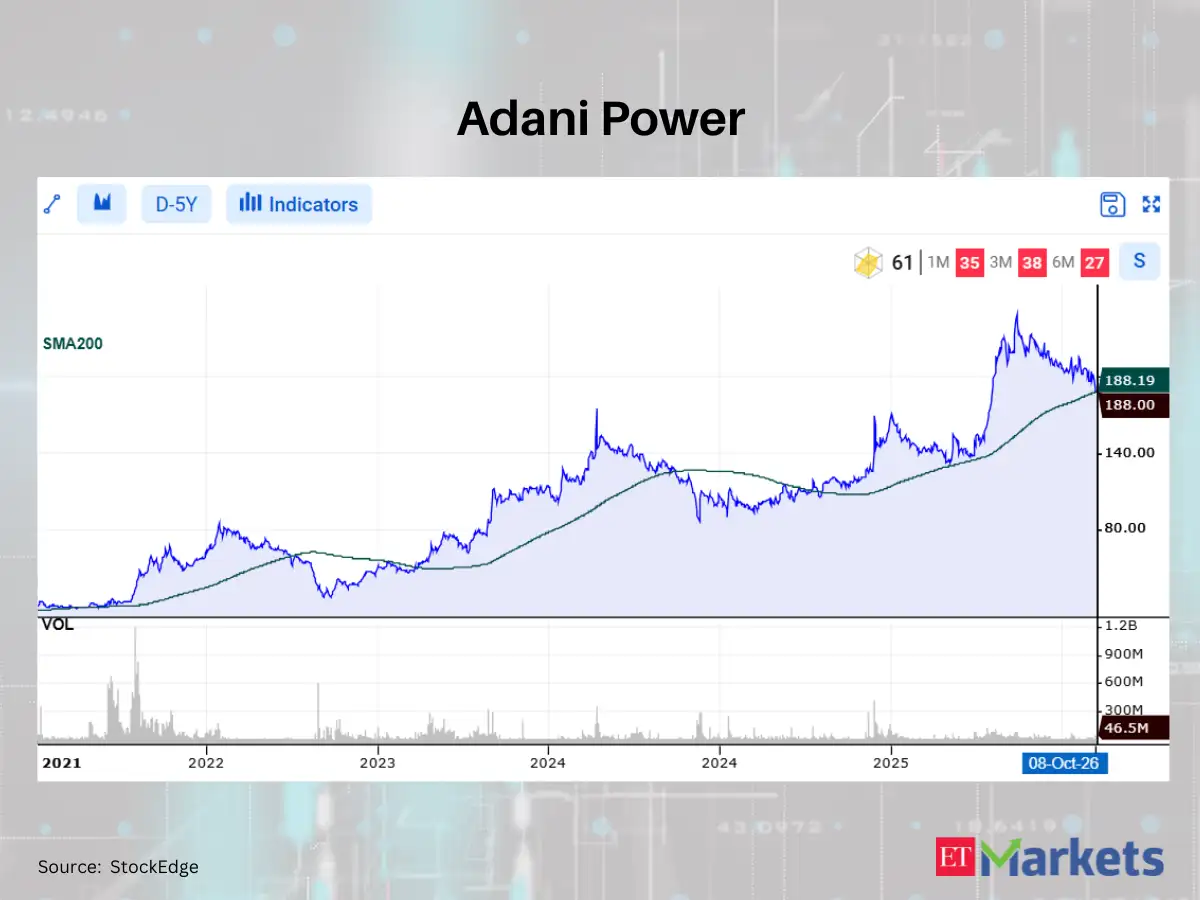
A negative breakout happens when a stock’s price drops below its 200‑day moving average (DMA), which smooths the last 200 closing prices. Recent data shows eight broad‑market stocks have slipped under this line, indicating a technical shift.
Falling beneath the 200‑DMA is commonly seen as a move from a long‑term uptrend to a downtrend. For traders, it can signal weakening momentum and may lead to a reassessment of positions, especially if the move is backed by higher volume.
Investors should watch whether these stocks find support near recent lows, look for reversal patterns, and stay alert to earnings releases or macro news that could affect price direction. A prolonged stay below the 200‑DMA may reinforce a bearish outlook, while a swift bounce could limit the impact.
Excerpt from Economic Times
In the Nifty500 pack, eight stocks' closing prices crossed below their 200-day moving averages (DMA) on October 08, according to technical scan data from StockEdge. Trading below the 200 DMA is generally considered a negative signal, as it suggests that a stock’s price is below its long-term trend. The 200 DMA is a…Read the original at Economic Times
Key takeaways
- Category: Stocks.
- AI reads the tone as negative (potentially bearish) for the stock.
Why it matters
A routine update. The tone is negative — watch for downside reaction. Use the price and stock snapshot to gauge how the market is responding.