Your loan EMI has a Washington problem: How the Fed quietly influences RBI rate decisions
Times of India 2 hrs ago·23 Sept 2026, 1:35 pm
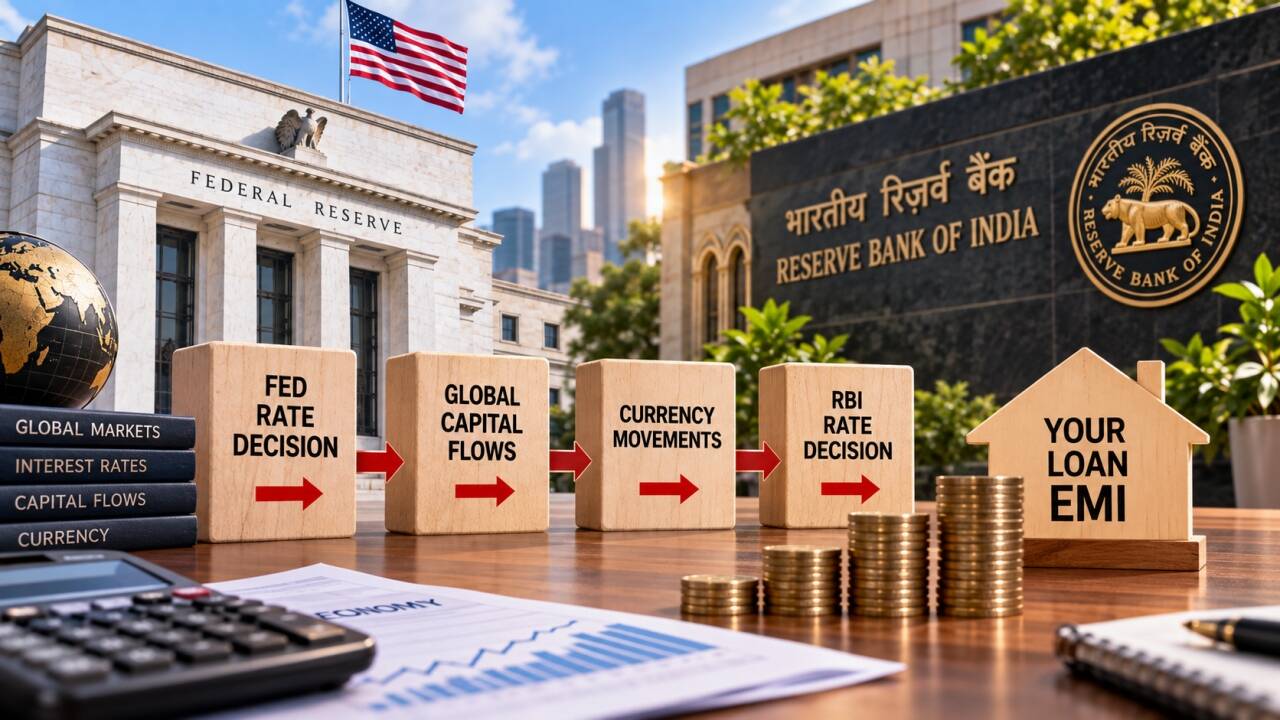
The US Federal Reserve’s recent interest rate hike is creating ripples for Indian markets. As the US raises rates to combat inflation, the value of the US dollar strengthens. This makes Indian exports more expensive for foreign buyers and attracts foreign capital away from emerging markets like India. Consequently, the Reserve Bank of India (RBI) faces pressure to maintain its own interest rates to prevent excessive capital outflows and stabilize the rupee.
For retail investors, this external pressure complicates the RBI's ability to cut rates to stimulate growth. If the RBI keeps rates high to defend the rupee, it could dampen domestic economic activity and corporate earnings. Conversely, a sudden rate cut might trigger volatility. The upcoming monetary policy review will be crucial in determining how the central bank balances these conflicting domestic and global economic priorities.
Investors should watch the RBI's policy statement closely for any hints on future rate cuts. A hawkish stance could support the rupee but hurt banking stocks, while a dovish approach might boost growth but risk currency depreciation. The key is to understand that global events are increasingly influencing local financial decisions.
Key takeaways
- Category: Economy.
- AI reads the tone as negative (potentially bearish) for the stock.
- Flagged as a high-impact, market-moving story.
Why it matters
This is a high-impact development and could move the stock. The tone is negative — watch for downside reaction. Use the price and stock snapshot to gauge how the market is responding.