Negative impactStocks
Explained - Here is why the Nifty Bank is witnessing pressure on Monday
CNBC TV18 1 hr ago·12 Oct 2026, 4:21 am
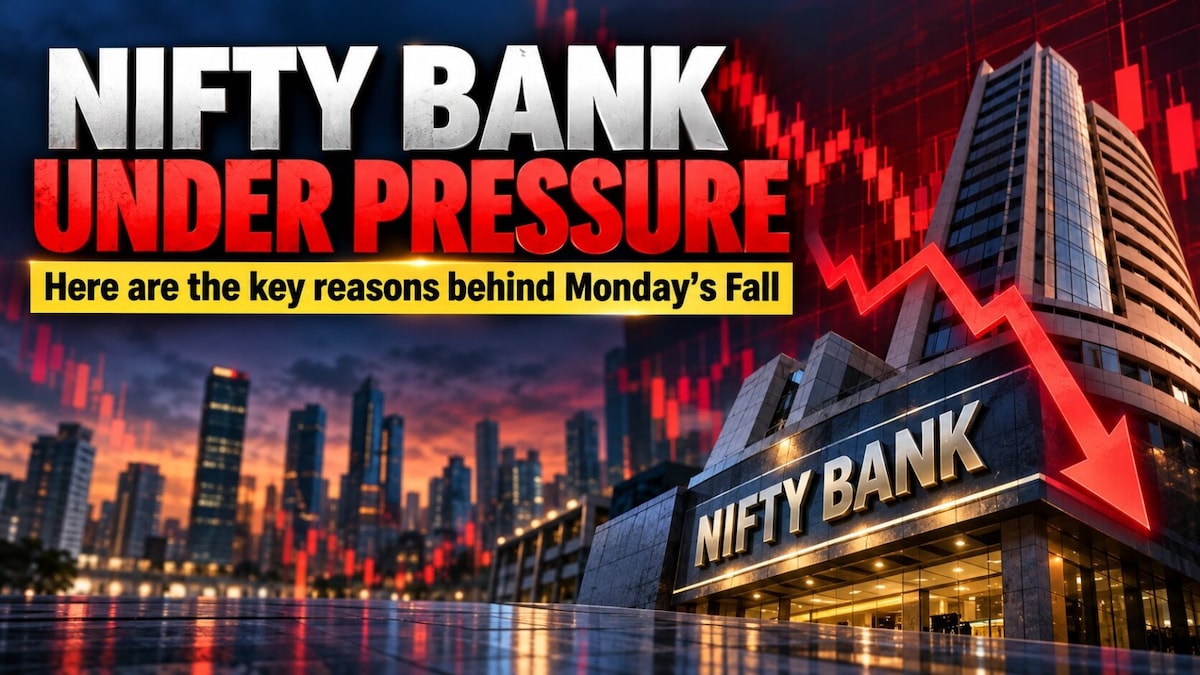
The Nifty Bank index is facing selling pressure on Monday, pulling the broader market down with it. This decline is driven by a sharp drop in banking stocks, which are major weightings in the index. The move comes as investors react to global cues and domestic factors, including concerns over liquidity and the credit outlook. The banking sector has been under scrutiny recently, leading to a reassessment of risk by market participants.
This pullback is significant for investors because the banking sector is a key pillar of the Indian economy. A sustained weakness in this sector can impact the broader market sentiment and the financial health of the banking system. It also signals a potential shift in investor risk appetite, as banking stocks are often considered defensive assets. The current volatility reflects the uncertainty surrounding the economic recovery and policy measures.
Investors should watch for the RBI's upcoming policy review and the credit growth data for further clarity. A strong policy response or positive data could help stabilize the banking sector. Conversely, continued weakness may lead to further volatility. It is essential to monitor the performance of major private and public sector banks to gauge the depth of the current correction and its potential impact on the broader market.
Excerpt from CNBC TV18
Published On Oct 12, 2026 | 09:51 IST Last Updated On Oct 12, 2026 | 09:52 IST Nifty Bank dropped 250 points as lenders faced pressure following RBI's move to raise the minimum daily cash reserve requirement to 99% and announce a Rs 25,000 crore OMO sale to manage surplus liquidity. The Nifty Bank index is trading…Read the original at CNBC TV18
Key takeaways
- Category: Stocks.
- AI reads the tone as negative (potentially bearish) for the stock.
- Assessed as a significant, market-relevant update.
Why it matters
A meaningful update worth tracking. The tone is negative — watch for downside reaction. Use the price and stock snapshot to gauge how the market is responding.