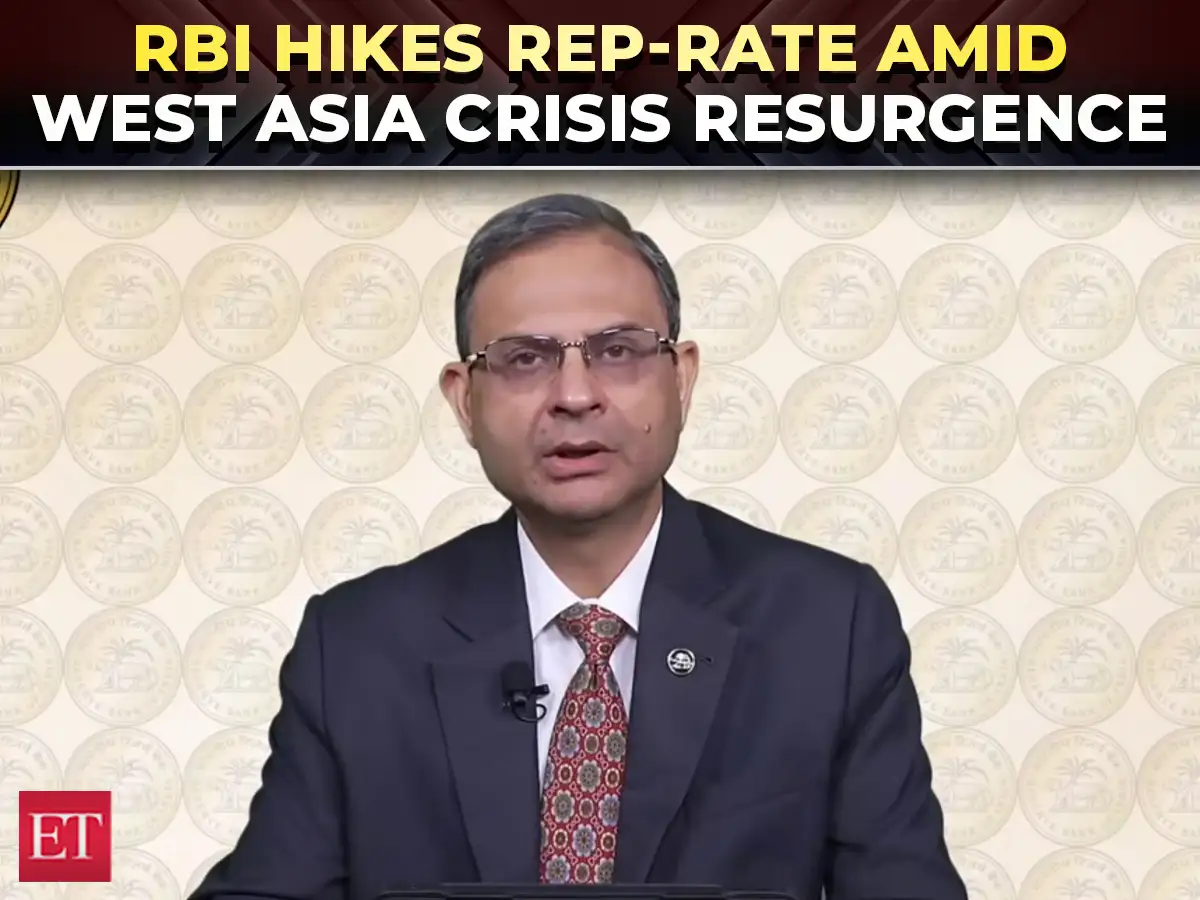
RBI Repo Rate 2026: Why RBI MPC lifted repo rates for the first time in nearly four years in October policy
Economic Times 1 hr ago·7 Oct 2026, 4:33 am
The Reserve Bank of India has raised its key lending rate by 25 basis points to 5.50%, marking its first increase in nearly four years. This move signals a shift in the central bank's stance, prioritizing the containment of inflationary pressures over the support of growth. The decision comes as economic activity has proven more resilient than anticipated, while rising global crude prices and potential agricultural output issues have complicated inflation forecasts.
For investors, this hike is significant as it increases the cost of borrowing for banks. Consequently, banks like Bank India may see their net interest margins improve, which could boost their profitability. However, higher rates also dampen loan demand and can slow economic expansion. Investors should watch for upcoming quarterly results to see if banks can effectively pass on these increased costs to borrowers while maintaining a healthy loan book.
Excerpt from Economic Times
RBI Repo Rate: The Reserve Bank of India increased the repo rate by 25 basis points to 5.50% after recent inflation concerns. Economic growth has exceeded expectations, prompting the central bank to adjust its monetary policy. Inflation risks are rising due to higher crude prices and weaker agricultural output…Read the original at Economic Times
Affected stocks
Bearish1 stock
Bull / bear label is derived from the article's AI sentiment — indicative, not advice. Prices may be delayed.
Key takeaways
- Concerns Bank OF India (BANKINDIA).
- Category: Corporate Action.
- AI reads the tone as negative (potentially bearish) for the stock.
- Flagged as a high-impact, market-moving story.
Why it matters
This is a high-impact development for Bank OF India and could move the stock. The tone is negative — watch for downside reaction. Use the price and stock snapshot to gauge how the market is responding.