Negative impactEconomy
Indian central bank curbs to temper corporate rush to hedge against rupee weakness
Economic Times 1 hr ago·12 Oct 2026, 2:08 am
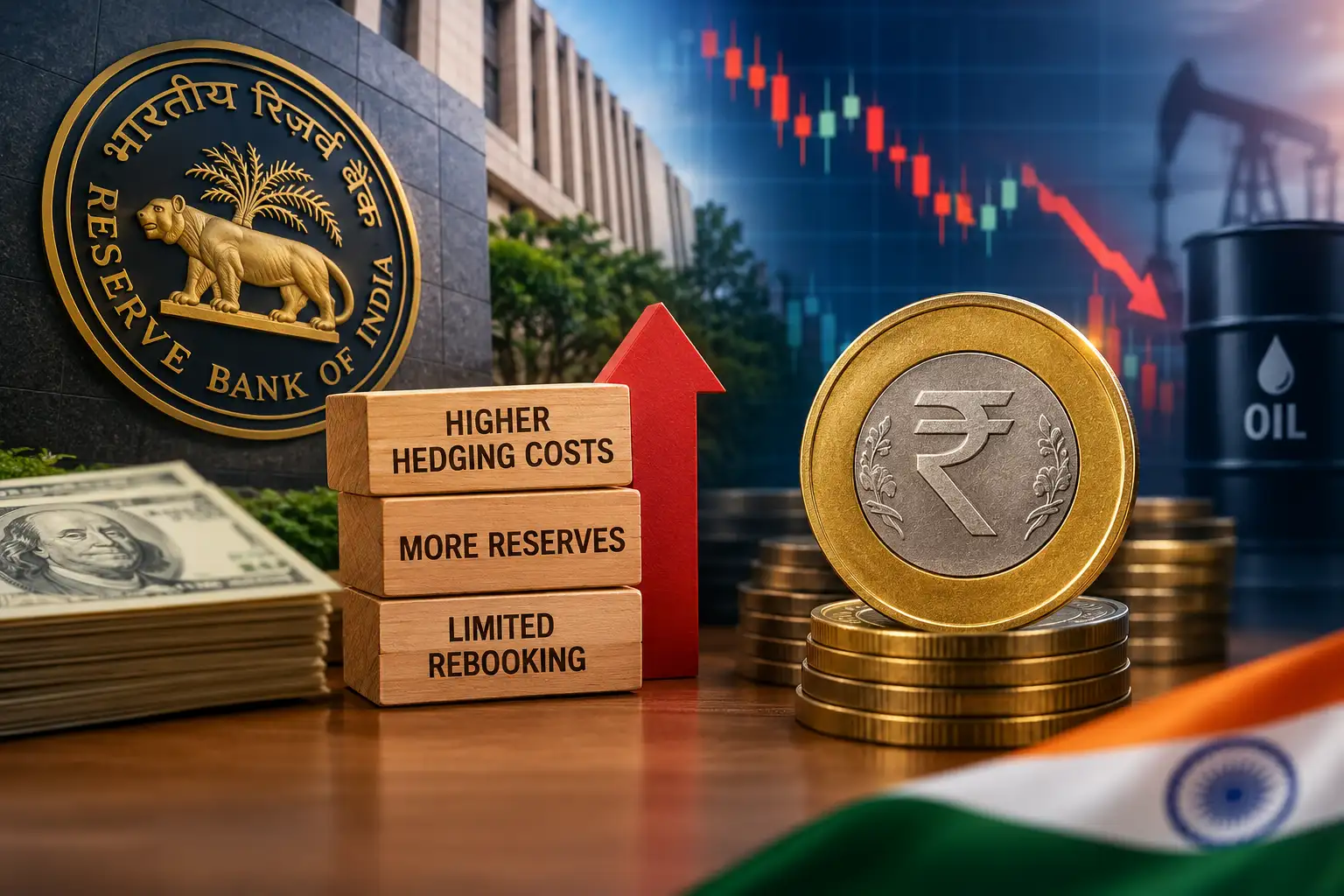
The Reserve Bank of India has introduced new rules aimed at slowing the rush by companies to hedge against a weakening rupee and rising oil prices. The measures raise the cost of hedging, tighten limits on speculative foreign‑exchange positions and let oil firms purchase dollars directly, a step meant to ease pressure on the currency market.
For banks such as Bank India, the changes could affect fee‑based income from hedging services and alter the flow of foreign‑exchange transactions. If corporates cut back on hedging activity, banks may see a dip in related revenues, while tighter rules could also shift demand toward other financing products.
Investors should keep an eye on any further RBI guidance, the evolution of rupee volatility and oil price trends, and how quickly corporate clients adapt to the new hedging framework, as these factors will shape the bank’s foreign‑exchange business outlook.
Excerpt from Economic Times
In response to the climbing oil prices and a declining rupee, the Reserve Bank of India has initiated fresh strategies aimed at economic stabilization. These measures involve hiking hedging expenses and curtailing speculative maneuvers among firms. Over the weekend, foreign banks adapted to these reforms to better…Read the original at Economic Times
Affected stocks
Bearish1 stock
Bull / bear label is derived from the article's AI sentiment — indicative, not advice. Prices may be delayed.
Key takeaways
- Concerns Bank of India (BANKINDIA).
- Category: Economy.
- AI reads the tone as negative (potentially bearish) for the stock.
- Assessed as a significant, market-relevant update.
Why it matters
A meaningful update for Bank of India worth tracking. The tone is negative — watch for downside reaction. Use the price and stock snapshot to gauge how the market is responding.